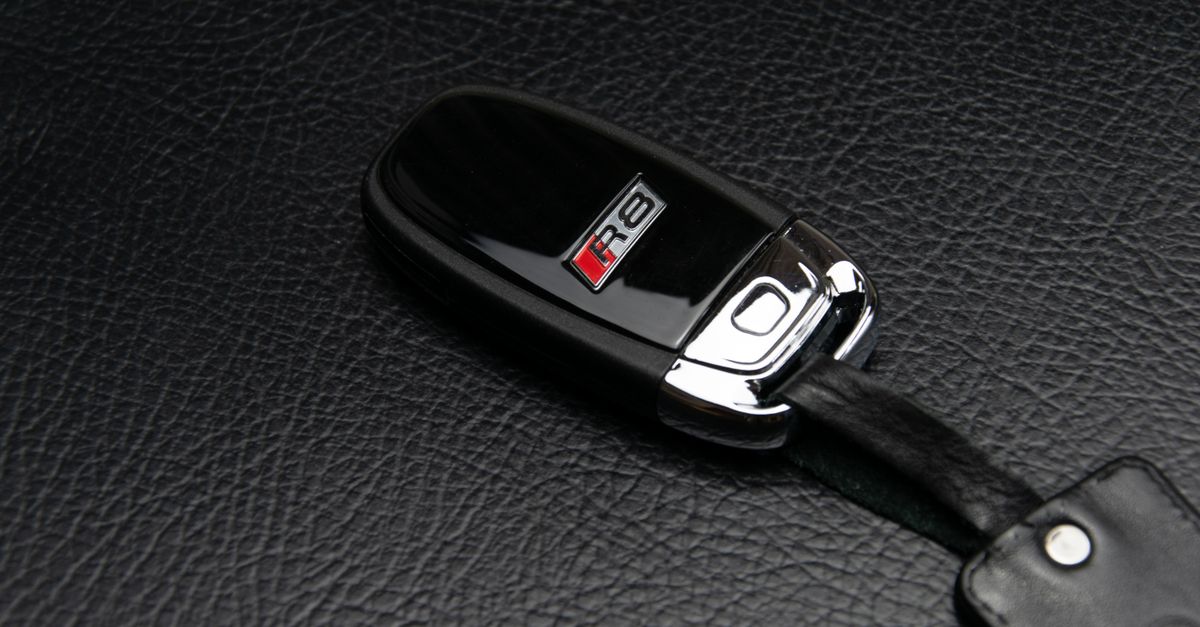
What Makes Audi Key Replacement More Involved Than a Standard Key Copy
Audi has used layered electronic security since the late 1990s, and today's lineup — from the A3 to the Q8 — relies on transponder chips, proximity sensors, and rolling-code encryption that changes every time the key is used. A replacement that skips the programming step will cut a key that physically turns the ignition but leaves the engine immobilizer active, so the car still will not start. Our technicians understand the full replacement process: mechanical cutting of the key blade to the vehicle's billet code, chip programming to match the immobilizer's stored codes, and fob pairing so remote lock, unlock, and trunk functions all work correctly.
Audi's lineup spans several distinct key types. Older models use a basic transponder key with a glass chip embedded in the head. Mid-range model years moved to a flip-key fob that combines a folding blade with remote buttons. Current models use a proximity smart key — sometimes called a Comfort Key — that allows push-button start without removing the key from your pocket. Each type requires different cutting profiles and different programming protocols. When you call (973) 784-8680, we ask for your model year and trim so the correct blank and equipment arrive with the technician.